A balanced Korean dinner is not about ordering the most dishes. It is about choosing dishes with different roles. One dish can be warm and brothy. Another can be grilled and savory. Rice gives the table a steady base. Banchan adds freshness, crunch, spice, or tang. When those roles are covered, the meal feels complete without becoming confusing.
This approach is helpful for families, friends, first-time guests, and mixed groups where not everyone wants the same spice level. Instead of asking, "What is the best dish?" ask, "What does the table need?" If the table already has rich BBQ, add something fresh. If the table has spicy stew, add rice and a mild dish.
The four-part dinner formula
A simple formula is base, comfort, contrast, and choice. The base is usually rice. Comfort might be a stew, soup, or familiar grilled item. Contrast comes from banchan, vegetables, or seafood. Choice means leaving room for different appetites, especially when the group includes children, mild eaters, or guests who love spice.
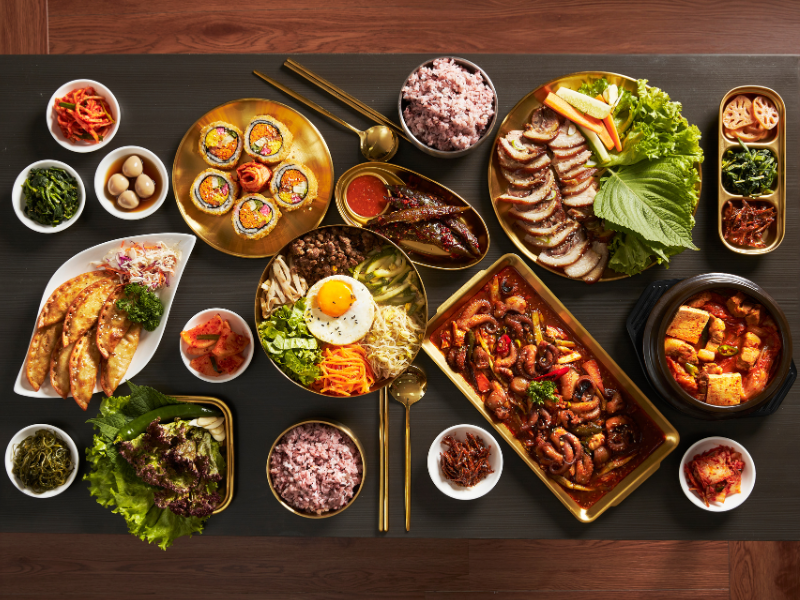
Dinner planning table
| Table need | What to add | Why it works |
|---|---|---|
| Warmth | Stew or soup with rice. | Gives the meal a comforting center. |
| Richness | Grilled meat or savory stir-fry. | Adds depth and a shareable main flavor. |
| Freshness | Banchan, vegetables, or lighter seafood. | Keeps the table from feeling too heavy. |
Ordering for different appetites
For two people, choose one anchor dish and one support. A stew with rice can be enough, or a grill item with banchan can feel satisfying. For three or four people, choose one brothy dish, one grilled or stir-fried item, rice, and sides. For larger groups, add variety slowly instead of ordering every category at once.
Spice should be planned, not guessed. If everyone loves heat, a spicy stew and spicy seafood dish can be exciting. If the group is mixed, keep one dish mild. Rice, mild sides, and simple drinks can help balance chili-heavy dishes.
Practical guest notes
Ask about ingredients when allergies or dietary restrictions matter. Korean sauces, broths, marinades, and banchan may include soy, sesame, wheat, egg, seafood, shellfish, nuts, or other ingredients. Dish availability and preparation can change, so direct questions are better than assumptions.
At 777 Korean Restaurant, a balanced dinner can be simple: choose rice, choose one warm dish, choose one shareable main, and let banchan bring the table together. That structure gives every guest a way into the meal while still leaving room for discovery.
A sample way to think about portions
Portion planning depends on appetite, but the structure can stay simple. For a lighter dinner, one stew with rice and banchan may be enough. For a relaxed shared dinner, add one grilled or stir-fried dish. For a larger group, choose a mild item, a spicy item, a brothy item, and a steady base so guests can build plates that fit their comfort level.
Avoid ordering only from one category. A table with only grilled meat can feel rich. A table with only spicy stews can feel intense. A table with only mild dishes can feel flat. The best Korean dinner usually has contrast: hot and cool, rich and crisp, spicy and calm, familiar and new.
How to adjust the table as you eat
A Korean dinner does not need to be perfect from the first order. As the table eats, you may notice what is missing. If everything feels rich, add something fresh or mild. If everything feels gentle, add a bolder sauce or a spicy dish. If the meal feels scattered, rice can bring the pieces together.
This flexible style is one reason Korean food works well for groups. The table can adapt. Guests can take more of what fits their appetite and less of what does not. A balanced dinner is not rigid; it gives people choices while still feeling like one shared meal.
Reader note
This guide is original informational content written to help guests make practical Korean dining decisions. It is not a guarantee of current menu availability, pricing, portion size, spice level, or preparation on a specific day.
If allergies, dietary needs, alcohol choices, takeout timing, or group orders matter, confirm details directly with the restaurant before ordering. Advertising, if shown on this page, is separate from the article and does not change the guidance.