Fermented flavor is one of the reasons Korean food can feel lively even when the ingredients are simple. Kimchi, fermented pastes, seasoned vegetables, and aged sauces can bring tang, saltiness, earthiness, gentle sweetness, and deep savory flavor. That depth is not the same thing as heat. A dish can be fermented and mild, fermented and spicy, or simply rounded by a sauce that has had time to develop character.
For first-time guests, fermented flavor may show up as brightness. Kimchi can taste sharp and refreshing. A stew made with aged kimchi can taste deeper, warmer, and more savory. A sauce can feel richer than expected because it carries more than salt or chili. When these flavors meet plain rice, tofu, vegetables, or grilled meat, the meal becomes balanced.
Kimchi is only the beginning
Kimchi is the most familiar example, but it is not the only fermented element in Korean cooking. Fermented soybean pastes, chili pastes, and seasoned vegetables can all shape a dish. Some bring color and spice. Others bring body to broth or a savory base to sauce. This is why a Korean stew can taste full even before a large amount of meat or garnish is added.
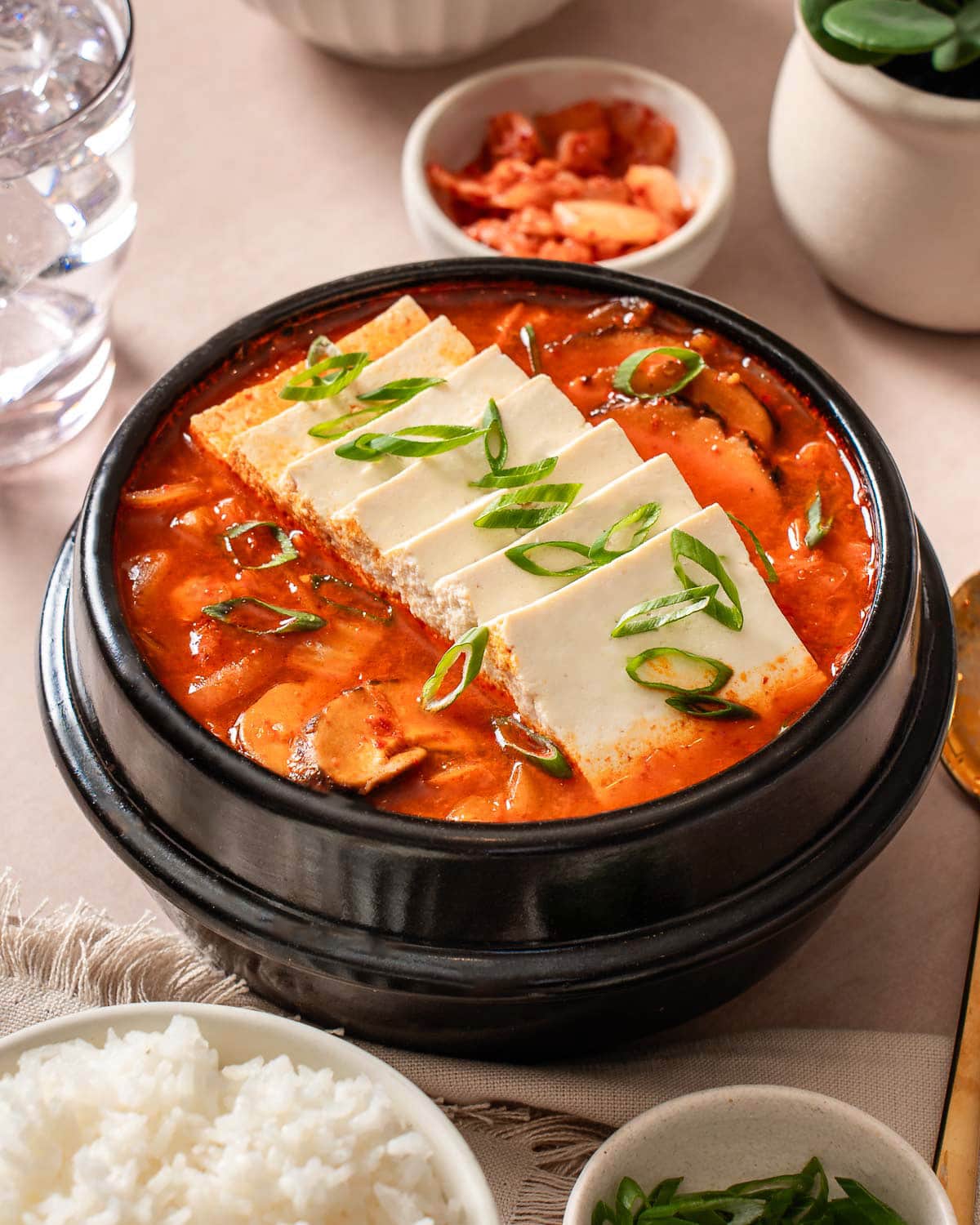
How fermented flavor changes a table
A table without contrast can feel heavy. Fermented foods help reset the palate between rich bites. A little kimchi beside grilled meat cuts through fat. A spoonful of kimchi stew beside rice turns sharpness into comfort. Banchan can add small bursts of acidity, crunch, or salt that keep the meal moving.
This is also why Korean meals are often better when eaten as a whole table. A fermented side dish may taste strong by itself, but it makes sense next to rice, broth, or grilled food. Instead of judging one bite alone, try the full rhythm: rice, main dish, side dish, pause, then another bite.
Ordering tips for new guests
- If kimchi tastes bold, eat it with rice or grilled meat instead of by itself.
- Ask whether a stew is mild, medium, or spicy before ordering.
- Try fermented sides in small bites first, then return to them during the meal.
- Remember that sour, savory, and spicy are separate qualities.
A note on comfort and preference
Some guests love fermented flavor right away. Others need a few bites to understand it. Both reactions are normal. Fermentation can create aromas and tang that are stronger than familiar everyday foods, but those same qualities are what make the meal memorable. If you are unsure, start with a dish where rice or broth softens the flavor.
How to describe what you like
If you are ordering with someone else, describe fermented flavor in practical words. You might say you like tangy foods, deep savory broths, or crisp sour sides. You might also say you prefer mild flavors and want only a small amount of kimchi. Clear language helps the table choose dishes that feel welcoming.
Fermented flavor is not something guests need to master. It is simply one more tool for balance. Try it with rice, try it with grilled meat, and notice how the same side dish can feel different depending on what comes before and after it.
At 777 Korean Restaurant, fermented ingredients appear as part of a larger dining experience, not as a test. Ask questions, taste slowly, and let rice and banchan do their work. Once the balance clicks, the table often feels warmer, brighter, and more satisfying.
Reader note
This guide is original informational content written to help guests make practical Korean dining decisions. It is not a guarantee of current menu availability, pricing, portion size, spice level, or preparation on a specific day.
If allergies, dietary needs, alcohol choices, takeout timing, or group orders matter, confirm details directly with the restaurant before ordering. Advertising, if shown on this page, is separate from the article and does not change the guidance.