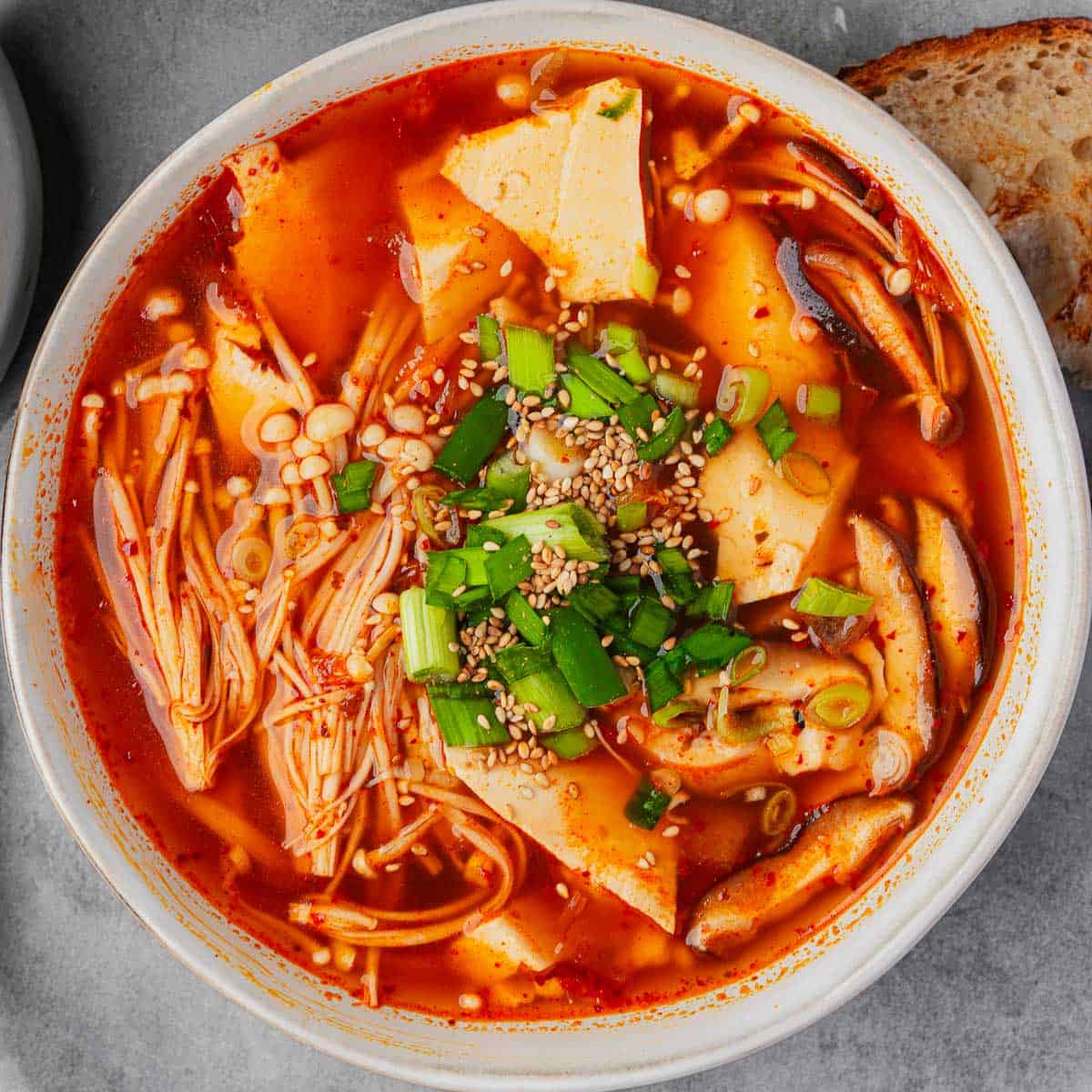
Korean soups and stews are often served with rice because the two foods complete each other. Soup brings warmth, aroma, seasoning, and comfort. Rice brings calm, texture, and balance. A spicy or salty broth can feel intense by itself, but it becomes easier to enjoy when each spoonful is followed by rice or paired with rice on the spoon.
This is especially true for dishes like kimchi jjigae, seafood stew, or rich broths with tofu and vegetables. The broth carries bold flavor, while rice gives the palate a steady place to land. If you are new to Korean stews, rice is not just a side. It is part of how the dish is meant to feel.
How to eat soup and rice together
There is no single rule. Some guests take a spoonful of broth, then a bite of rice. Others place a little rice on the spoon with the soup. Some keep rice separate so the texture stays clean. The best method is the one that makes the dish balanced for you.
Pairing table
| Soup style | Best support | Why it works |
|---|---|---|
| Spicy stew | Plain rice and mild banchan. | Softens heat and keeps the meal comfortable. |
| Seafood broth | Rice and a grilled or vegetable item. | Adds texture beside a lighter broth. |
| Rich soup | Crisp sides and small bites of rice. | Keeps the meal from feeling too heavy. |
Choosing side dishes
Banchan matters with soup because it changes the pace. A crisp side can refresh the palate. A tangy side can brighten a rich broth. A mild vegetable can cool down a spicy spoonful. If the soup is already bold, choose calmer sides. If the soup is gentle, a stronger banchan can make the meal more interesting.
For a shared table, soup can be the warm center while grilled meat or a rice bowl adds texture. This is useful when one guest wants comfort and another wants something more filling. Korean dining works well because dishes with different roles can still belong together.
Practical notes before ordering
Soups and stews can contain ingredients that are not obvious from the surface: seafood broth, pork, soy, sesame, wheat, egg, or other seasonings. Guests with allergies or dietary restrictions should ask before ordering. Also remember that hot bowls stay hot for a while, so take small spoonfuls at first.
At 777 Korean Restaurant, soup and rice can be a full meal or part of a larger table. If you are unsure what to order, start with a stew, add rice, and choose one side or grill item for contrast.
How rice changes strong broth
Rice can soften more than spice. It can also balance saltiness, sourness, and richness. A kimchi-based broth may feel sharp by itself, but rice rounds the edges. A seafood broth may taste aromatic and intense, while rice gives it a calmer base. A rich pork or tofu stew can feel more filling when rice is eaten slowly alongside it.
This is why guests should avoid judging a Korean soup from a single sip. The dish is designed to interact with the rest of the table. Taste the broth, add rice, try a side dish, and then return to the broth. The full pattern often feels more balanced than the first spoonful suggests.
Ordering soup for one person or a group
For one person, soup and rice can be a complete meal when the broth has enough body and the side dishes add contrast. For two people, a stew plus one dry dish can create a better balance. For larger groups, soup works well as the warm center of the table while grill items, rice bowls, or banchan provide different textures.
If several guests are sharing, ask whether the soup is meant for one person or the table. Portion style can vary, and some bowls are easier to share than others. Also ask about spice level, seafood broth, pork, and allergens before ordering.
Reader note
This guide is original informational content written to help guests make practical Korean dining decisions. It is not a guarantee of current menu availability, pricing, portion size, spice level, or preparation on a specific day.
If allergies, dietary needs, alcohol choices, takeout timing, or group orders matter, confirm details directly with the restaurant before ordering. Advertising, if shown on this page, is separate from the article and does not change the guidance.